Case Study: Building Service Folio – A High-Performance Portfolio Template
Overview
Every creative professional and developer faces the same challenge: your website is your digital business card, but building one from scratch that looks great and runs flawlessly takes valuable time away from client work.
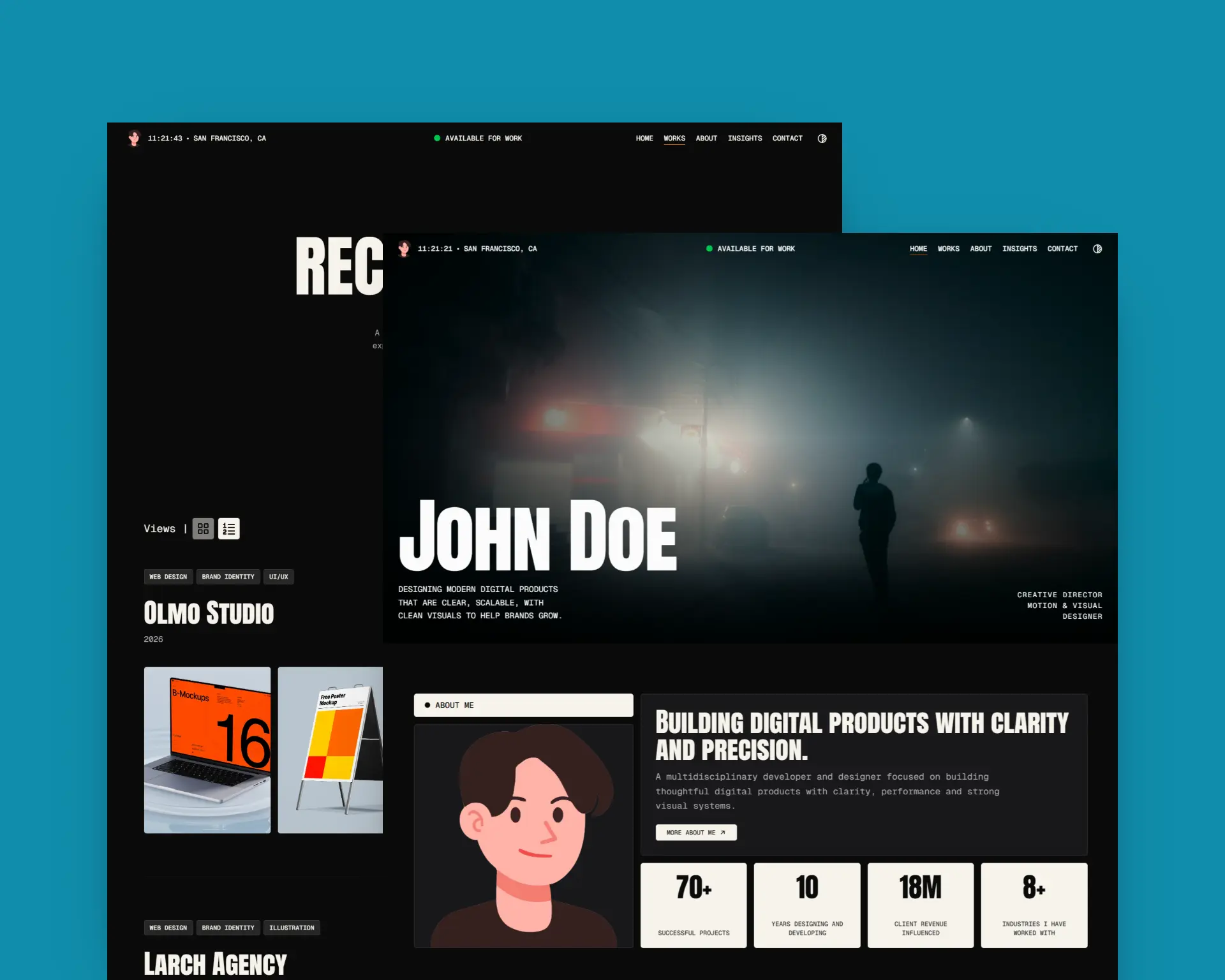
I built Service Folio to solve this. It’s a clean, minimal portfolio template designed for agencies, freelancers, and developers who need an efficient, high-performance base to showcase their work and scale their business without dealing with bulky UI frameworks or slow load times.
The Challenge
Most modern portfolio templates suffer from two main issues:
- Performance bloat: Relying on heavy frontend frameworks often leads to low Lighthouse scores and sluggish mobile experiences.
- Hardcoded clutter: Updating a single project or changing a social link shouldn’t require digging through dozens of deeply nested components.
The goal was to create a codebase that is fully type-safe, loads instantly, uses smooth motion that doesn’t sacrifice accessibility, and centralizes all data so any user can customize it in under ten minutes.
Technical Approach & Architecture
1. Hybrid Rendering with Astro 6
To guarantee a lightning-fast experience, the project is built on Astro 6 using a hybrid rendering strategy (output: 'server'). Content-driven sections like individual case studies and blog posts are selectively prerendered at build time, while dynamic components like the contact form run efficiently on the server.
2. Micro-Interactions & Polished Motion
Instead of scattering animation scripts everywhere, I consolidated the motion logic using GSAP and Lenis for global smooth scrolling.
- Intentional Reveals: Reusable animation hooks handle structural elements smoothly.
- Custom Desktop Layer: Elements declaring a
data-cursorattribute hook into a desktop-only dynamic pointer tracker, creating interactive image previews when hovering over project listings.
3. Centralized Data Flow
To make customization foolproof, I completely isolated the presentation layer from the site data.
- All editable text strings, navigation trees, and visual assets are mapped to simple, typed arrays inside
src/config/. - Long-form content utilizes Astro’s native Content Collections with robust Zod schemas, preventing compilation errors before deploying to production.
Key Features Built-In
- Secure Form Handling: The contact flow utilizes Astro Actions with built-in Honeypot protection against bots, forwarding validated entries directly to an inbox using the Resend API.
- Utility-First Styling: Built entirely with Tailwind CSS v4, using fluid typography tokens and native CSS custom properties for a seamless Dark/Light mode toggle that syncs with
localStorage. - Zero-Config SEO: A centralized
<BaseHead/>component automatically handles canonical mappings, Open Graph previews for social networks, automated sitemaps, and structured RSS fields.
Results and Takeaways
Building Service Folio proved that you don’t need megabytes of JavaScript to deliver a premium user experience. By leveraging Astro’s component-island model and handling heavy tasks on the server, the template achieves near-perfect performance scores while maintaining complex layouts and rich scroll interactions.
It stands as a reliable, modern foundation for anyone looking to put their work forward with maximum precision and zero technical overhead.
Technologies:
Astro
GSAP
Tailwind
Typescript
Astro
GSAP
Tailwind
Typescript